Game design document, summarised
How it's designed
Each part below condenses one chapter of the game design document. Every summary ends with a link to
the full chapter in the PDF.
01The game at a glance
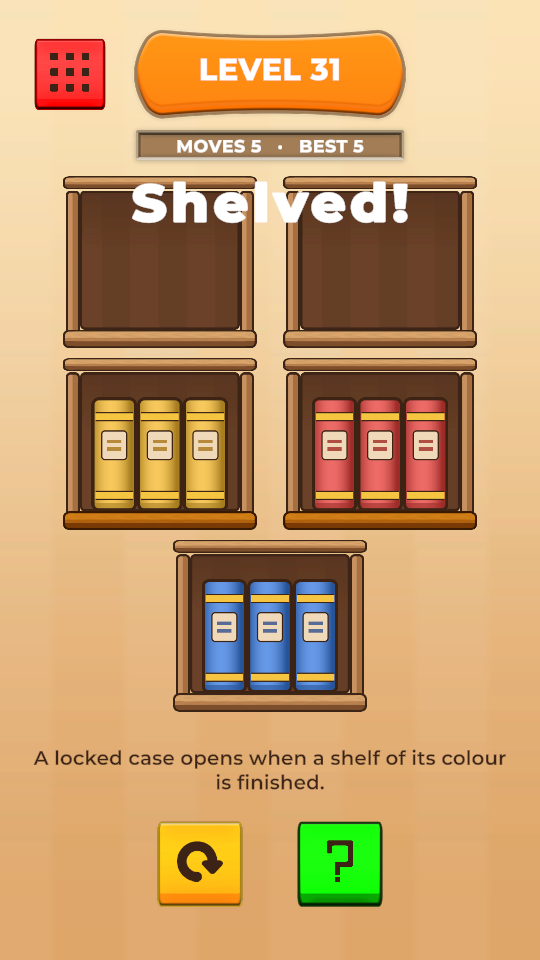
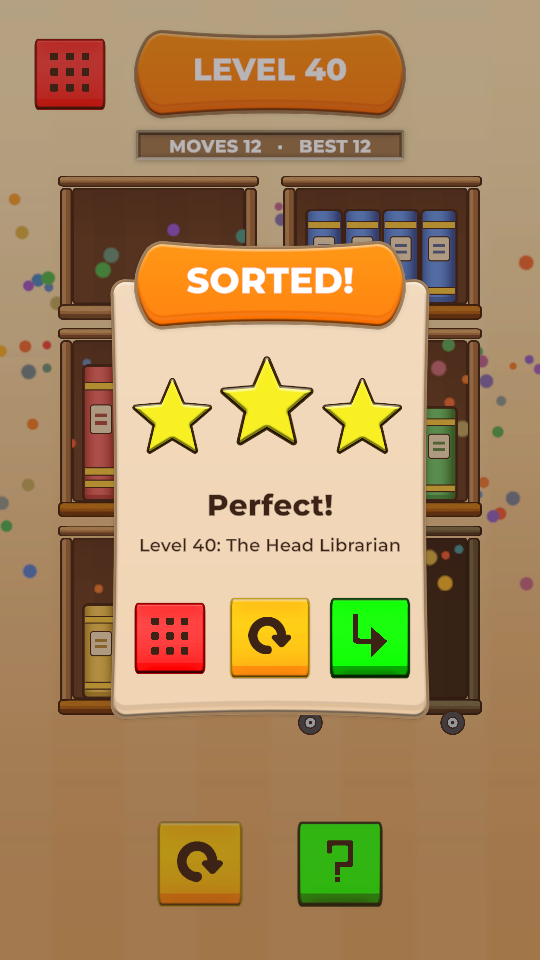
Look, lift, place, finish. Books go onto the same colour or an empty shelf; a full shelf of one colour turns gold. No timer and no fail: stars reward the fewest moves, a hint shows the solver's next move, and restart is free.
- Readable at a glance: tall books look tall.
- One new idea per chapter, brought in on an easy level.
- No decoration: every mechanic must change the best line.
Read the full chapter in the GDD (page 1)
02Height, the cart and locked cases
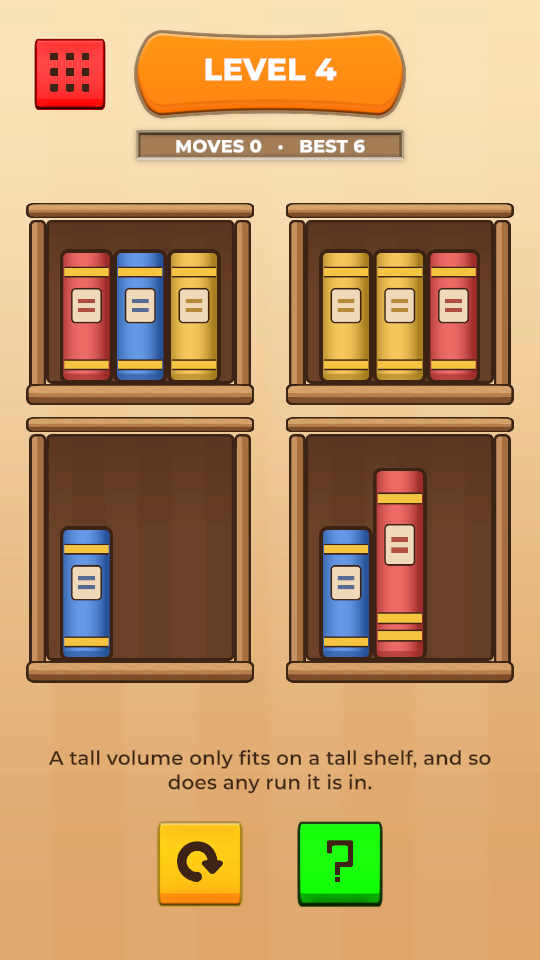
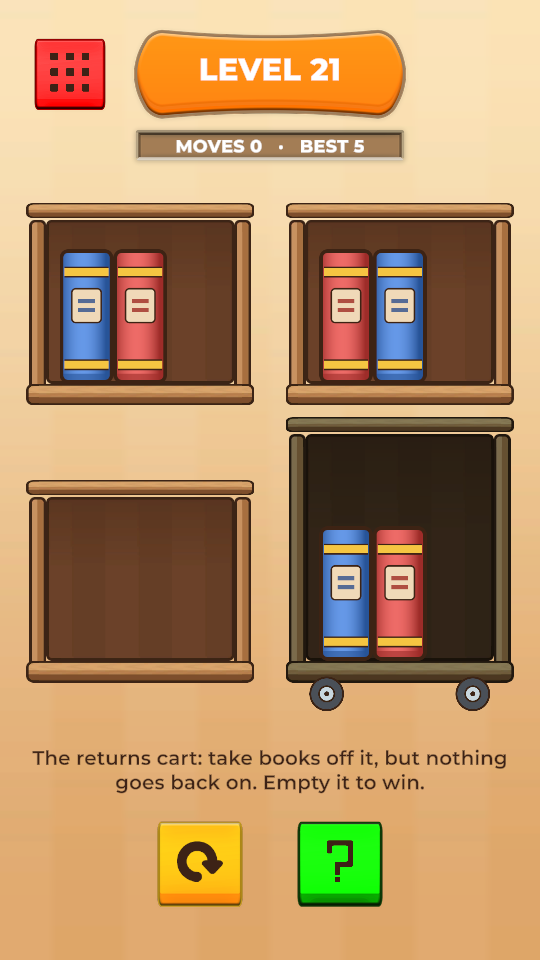
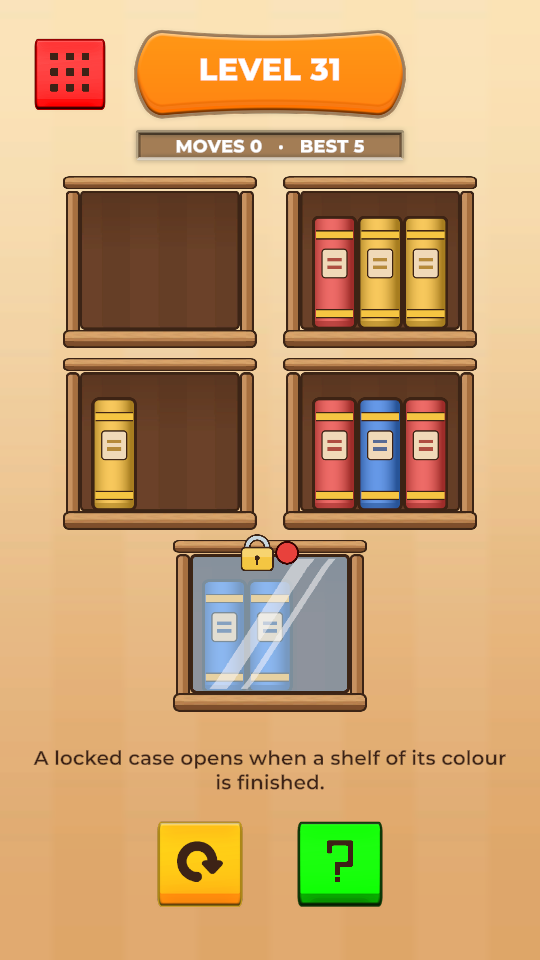
Shelves are low or tall, and any run with a tall volume in it fits only on a tall shelf. The returns cart only gives and must end empty. A locked case holds books nobody can touch until a shelf of its tag's colour is finished; then the padlock pops off.
Read the full chapter in the GDD (page 2)
03Four chapters, one idea each
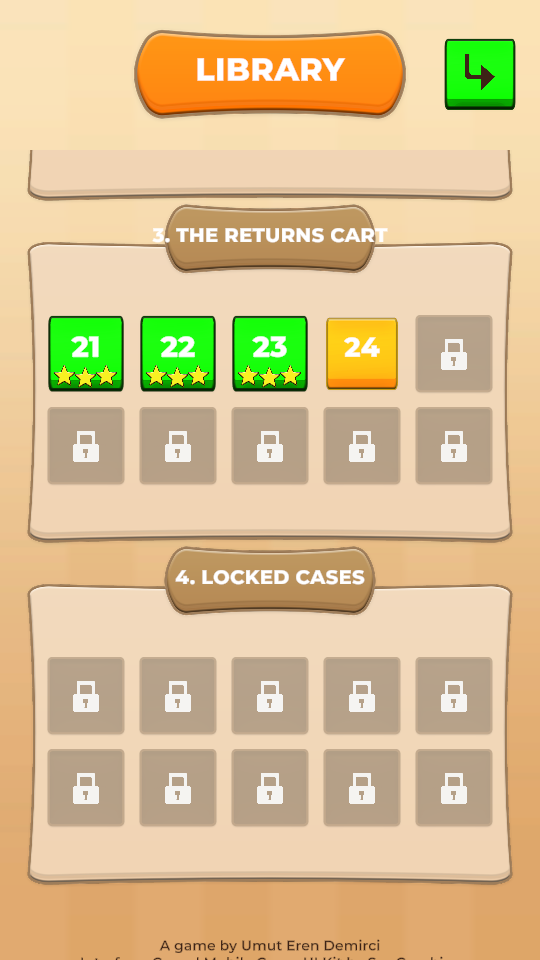
The shelves; bigger collections; the returns cart; locked cases and everything together. Within each chapter the best line climbs in a sawtooth, from 3 to 12 moves across the game, with a breather after the peaks. A one-line tip appears only where an idea is new.
Read the full chapter in the GDD (page 3)
04Levels made and proven
I write each level as a spec: shelves, colour sets with their tall volumes, a range for its par and its focus, the newest mechanic. A generator deals the books and keeps a deal only if nothing starts finished, the par is in range and switching the focus off changes the best line. Tests check every par.
Read the full chapter in the GDD (page 4)
05What the solver and the bots found
Heights per colour did nothing, and an empty reserved shelf was decoration; both were redesigned. Bots found the height rule's real job: careless play dead-ends, so the game now says so and points at restart. Shelf Life has not been playtested by people yet, and the document lists what only they can show.
Read the full chapter in the GDD (page 5)
06Feel, art and next steps
Lifted runs rise, books fly home in an arc, a finished shelf turns gold and its books hop, and a case opens with a pop. The interface is SunGraphica's Casual Mobile Game UI Kit. A monetisation plan (not built), the first KPIs to measure, and a roadmap close the document.
Read the full chapter in the GDD (page 6)