Umut Eren Demirci
← All games
Hyper-casual puzzle · Unity 6 · Android and browser

Pull-out

Tap the pencils out. Mind the tray.

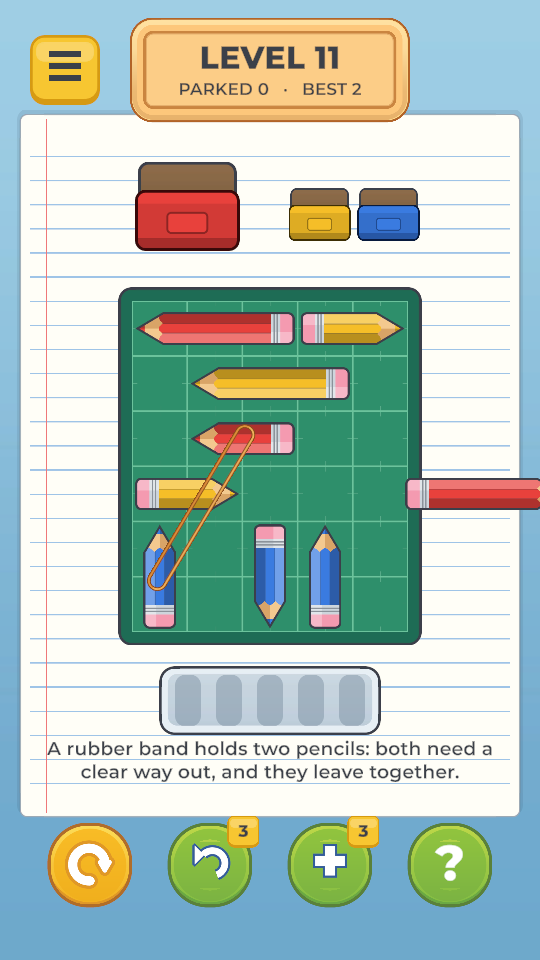
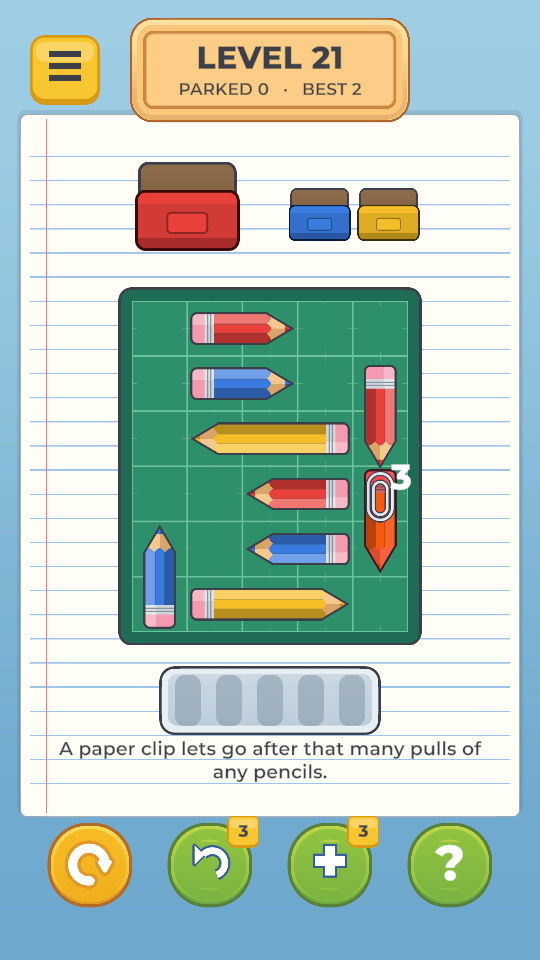
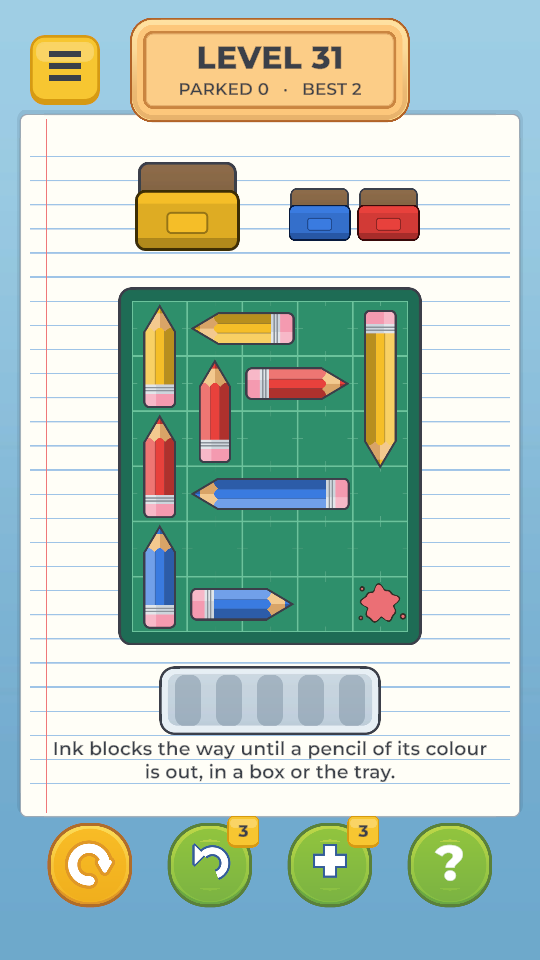
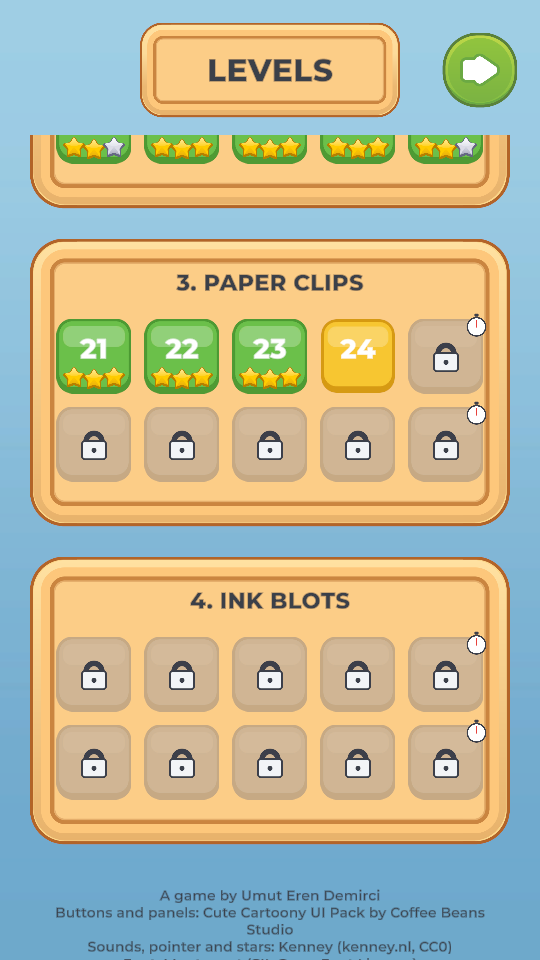
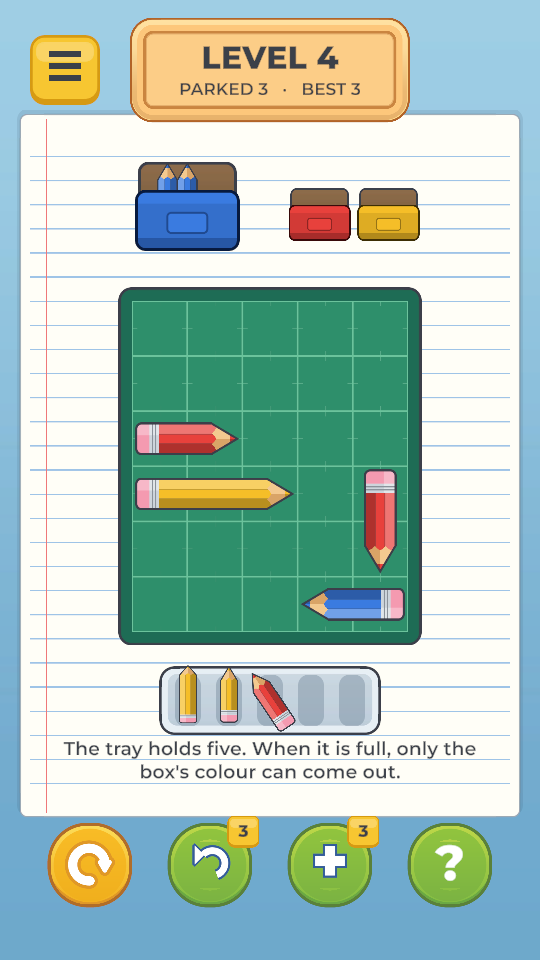
A hyper-casual tap-away puzzle for phones. Pencils point one way and slide out when nothing blocks them, into the box at the front if it is their colour, otherwise into a tray of five. Three pencils fill a box, it rolls away and the waiting pencils of the next colour hop in; fill the tray and nothing else can come out. Later chapters add rubber bands, paper clips and ink blots, two boosters and levels against the clock.

I designed the rules, the three mechanics, the boosters and the clock, 40 levels in four chapters and the look on a free cartoony UI kit. A generator deals the levels to my specs, a solver proves every par, and a level is kept only if its newest mechanic changes the par or the tray it needs.

Play in your browserRead the GDDOne-pager
30/30levels where the newest mechanic changes the par or the tray needed
0 of 300deals where clips and blots tied to boxes mattered, so they were redesigned
89–99%of a careless bot's games dead-end on six of the 40 levels
Game design document, summarised

How it's designed

Each part below condenses one chapter of the game design document. Every summary ends with a link to the full chapter in the PDF.

01The game at a glance

Read, pull, box or park. A free pencil slides out the way it points; the front box takes its colour and anything else waits in the tray. Stars reward the fewest pencils parked, a hint shows the solver's next pull, and restart is free; only timed levels can be lost.

  • Readable at a glance: a pencil points the way it goes.
  • One new idea per chapter, brought in on an easy level.
  • No decoration: every mechanic must change the par or the tray needed.
Read the full chapter in the GDD (page 1)

02Bands, clips, ink and boosters

Two banded pencils leave together and both need a clear way out. A clipped pencil waits until that many pulls have been made. Ink blocks the way until a pencil of its colour is out. An extra tray slot and undo help when stuck, and every fifth level from 10 is against the clock.

Read the full chapter in the GDD (page 2)

03Four chapters, one idea each

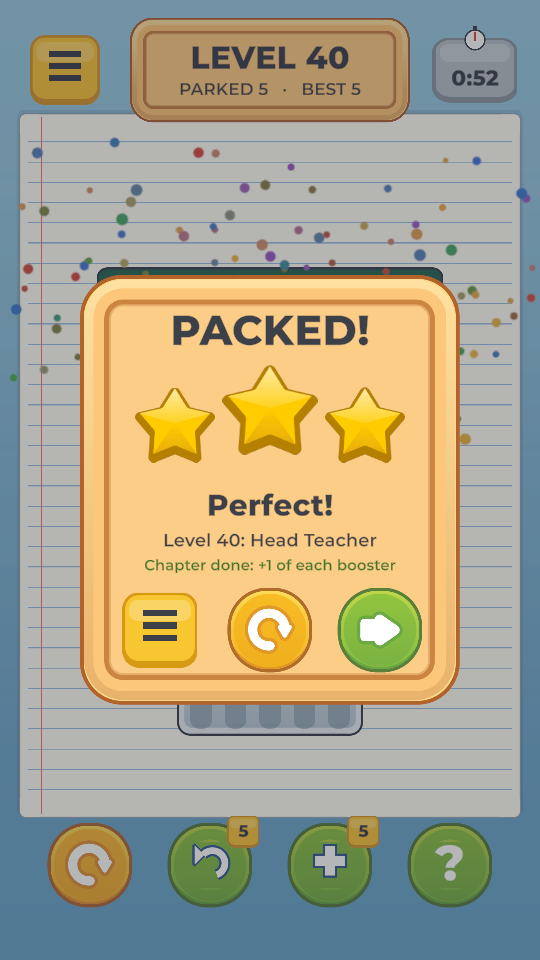
The desk; rubber bands; paper clips; ink blots and everything together. Within each chapter par climbs in a sawtooth, from 0 to 6 pencils parked, with a breather after the peaks. A one-line tip appears only where an idea is new.

Read the full chapter in the GDD (page 3)

04Levels made and proven

I write each level as a spec: the mat, the pencils of each colour, a range for its par and its focus, the newest mechanic. A generator deals the pencils and keeps a deal only if its par is in range and switching the focus off changes the par or the tray it needs. Tests check every par.

Read the full chapter in the GDD (page 4)

05What the solver and the bots found

Clips and blots released by boxes never mattered, since the box order is fixed; released by the player's own pulls, they do. Par alone missed how full the tray gets, so the generator now checks the tray a level needs too. Pull-out has not been playtested by people yet, and the document lists what only they can show.

Read the full chapter in the GDD (page 5)

06Feel, art and next steps

Pulled pencils shoot off the mat and arc into their box, a full box gets a red tick and rolls away, and waiting pencils hop across. Buttons and panels come from Coffee Beans Studio's Cute Cartoony UI Pack; the pencils and desk are drawn in code. A monetisation plan (not built), the first KPIs to measure, and a roadmap close the document.

Read the full chapter in the GDD (page 6)
From the build

Screenshots

Every image is captured from the game itself.

Design documents

Read more

Built with an AI coding assistant (Claude). I designed the game, set the rules, the chapter plan and the tuning, and reviewed every build. Buttons and panels: Cute Cartoony UI Pack by Coffee Beans Studio; sounds by Kenney; Montserrat.